Choosing a ryokan in Kyoto with a private onsen as your base
Think of your ryokan in Kyoto with a private onsen as your real itinerary. The right Kyoto ryokan shapes when you walk through Gion, how you move between Higashiyama’s slopes and the river, and where you return when the crowds thin at night. For a solo traveler, the decision to stay Kyoto side in a traditional Japanese inn with a private bath is less about luxury and more about control over pace, privacy, and how deeply you want to step into ritual.
When you search for a ryokan Kyoto private onsen option, read the small print before you book. Listings in Kyoto city often distinguish between a true private onsen fed by natural hot springs and a modern hot bath that is simply heated tap water in a stylish tub. Check whether the room private facilities are open air baths on a terrace, enclosed air baths with large windows, or a compact indoor air bath beside the tatami room, because each layout changes how you will feel during your stay.
Properties such as Nazuna Kyoto Tsubaki St. or Nazuna Ninenzaka offer rooms private enough for a solo guest to move between futon and hot spring style bath without crossing a corridor. In these Kyoto onsen style stays, kaiseki dinner is often included, and the staff quietly adjust the timing to your rhythm rather than the other way around. If you prefer a more classic garden setting, a place like Ryokan Yachiyo near Nanzen-ji gives you a Kyoto private sense of seclusion while still keeping you close to subway lines and the museums of Okazaki, so your hotel Kyoto choice never isolates you from the city.
Reading listings: private onsen, shared baths and what they really mean
Most travelers see the words onsen Kyoto and assume every bath is a natural hot spring. In reality, Kyoto city has limited hot springs, so many baths Kyoto side are beautifully designed but use heated municipal water rather than true hot springs drawn from a spring source. When you compare a Kyoto ryokan with a hotel Kyoto property, look for the term hot spring or hot springs in the description, and check whether the water is transported from an external source such as Arima Onsen or another region.
Private onsen facilities usually fall into three categories that matter for a solo guest. First, there are rooms private enough to have an in room private bath, sometimes an open air bath on a balcony, sometimes a deep stone tub indoors with generous air circulation. Second, some ryokan offer reservable family baths, which are technically shared but can be locked for a time slot, giving you a private bath experience without paying for a suite.
Third, you have the classic communal air baths, separated by gender, which are the heart of onsen culture even when the water is not from a natural spring. If you are choosing where to stay Kyoto side specifically for the onsen and public bath experience, use a specialist guide on how to choose a Kyoto hotel around your onsen and public bath experience to decode the terminology. For a first time solo traveler, a mix of one night with a true private onsen in your room and another with access to larger shared baths can be the most balanced way to feel both cared for and quietly independent.
The choreography of an evening: from arrival tea to night bath
Arrive in Kyoto city by mid afternoon if you can, so your stay begins before the rush of night check ins. At a traditional Japanese ryokan, you will usually be welcomed into a low lounge, your luggage disappearing to the rooms while you sit with a small sweet and a cup of green tea. This is the first signal that you are now a guest in the deeper sense, not just a name on a booking sheet.
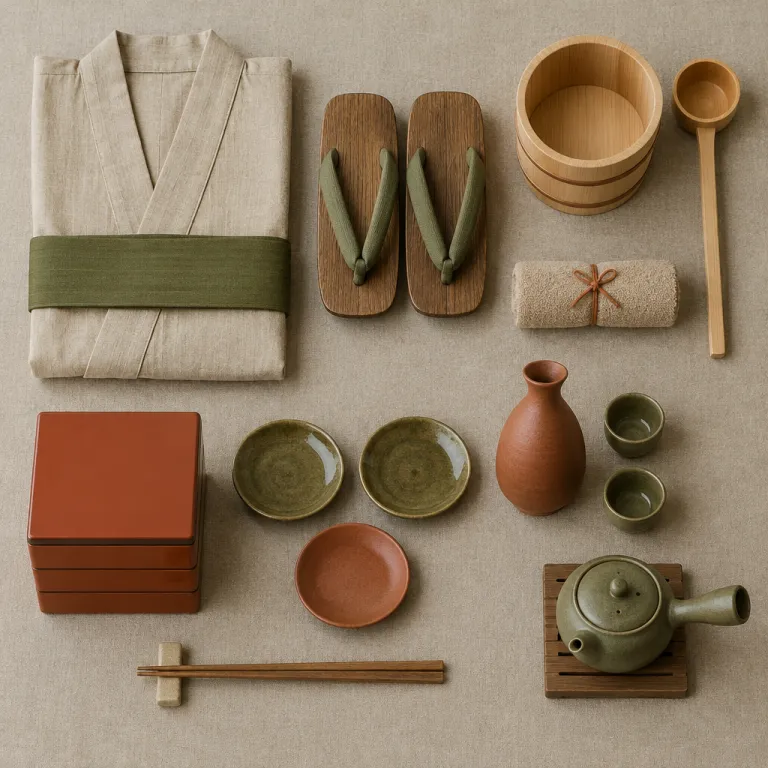
Once you reach your room, slide open the shoji and let the air move through, then check the layout of your private onsen or bath before you unpack. Some Kyoto ryokan properties place the open air tub on a tiny terrace with bamboo screens, others tuck the air bath into a corner with a window framing a stone garden, and a few like Nazuna create semi open air baths that blur the line between inside and outside. You will usually find yukata robes and amenities already included, so you can step straight into the ritual without worrying about what to wear.
The first hot bath usually comes before dinner, when the light softens over Kyoto and the city noise drops. Wash carefully at the shower area, then sink into the hot water and feel the day’s train air and temple dust lift from your skin. After ten or fifteen minutes, step out, cool down in the room private space, and repeat once more, because the rhythm of alternating heat and rest is what makes the onsen Kyoto experience feel both grounding and quietly indulgent.
Onsen etiquette for solo travelers: feeling at ease in every bath
Onsen etiquette is less about rigid rules and more about respect for shared water. Whether you are in a private onsen attached to your room or in large communal baths, the sequence remains the same ; you wash first, then soak. Use the small stool and hand shower to clean your body thoroughly, tie up long hair, and keep towels out of the bath itself, resting them on your head or the edge instead.
If you have tattoos, Kyoto ryokan policies vary, so check in advance whether they are accepted in shared baths Kyoto side or whether you should rely on your room private facilities. Many solo guests choose a ryokan Kyoto private onsen setup precisely to avoid any uncertainty, enjoying open air baths on their own schedule without worrying about other guests. In mixed temperature hot baths, start with the slightly cooler pool, then move to the hotter one, listening to your body rather than the clock.
For women traveling alone, the combination of attentive staff and clear routines can feel quietly protective rather than intrusive. You can walk from your futon to the hot spring style tub at night without crossing public corridors, and you control how visible you are at every stage of your stay. When you step out into the cool air after a late bath and slide the shoji closed behind you, Kyoto outside feels distant, yet the city’s temples and ramen counters remain a short walk away when you are ready to rejoin them.
Kaiseki, sleep and the morning bath: why the room becomes the journey
Kaiseki is the multi course expression of the region, and in Kyoto it often turns your room into a private dining salon. After your first bath, staff will bring a procession of small dishes to your tatami, each plate calibrated to the season, the local spring vegetables, and the temperature of the night air. You are not expected to understand every element ; you are expected to eat slowly, ask if you are curious, and let the rhythm of the meal match the rhythm of your stay Kyoto side.
Once dinner is cleared, the same room transforms again as futons are laid out, duvets fluffed, and the low table moved aside, which is where the art of being a guest in Kyoto truly reveals itself. You are not performing for anyone, yet you are held by a structure that has been refined over generations, from the angle of the pillow to the way the sliding doors mute the sounds of Kyoto city outside. If you wake in the night, another short bath in your private onsen or indoor tub can be the most calming way to reset your body clock.
Morning brings a different kind of hot water, often a slightly cooler bath that prepares you for the day rather than sending you to sleep. Step into the open air tub if you have one, breathe in the crisp air, and notice how the same garden or courtyard looks entirely different from the night before. Breakfast, usually included in the rate, will be a careful balance of grilled fish, rice, miso soup, and pickles, and by the time you step out toward Higashiyama or Arashiyama, you will feel that your room, not the sights, has been the quiet center of your Kyoto onsen journey.
Choosing your neighborhood: where a ryokan stay shapes your Kyoto
Location decides whether your private onsen night is framed by temple bells or neon. A ryokan Kyoto private onsen stay in Gion or southern Higashiyama puts you within a short walk of Yasaka Shrine, Kiyomizu-dera, and the narrow lanes where lanterns glow softly after dark. In these districts, the air at night feels almost theatrical, yet your room private space remains a retreat from the performance outside.
Stay closer to Arashiyama and your hot baths will bookend walks through bamboo groves and riverside paths, rather than late night ramen counters and bars. Here, some Kyoto ryokan properties offer open air baths facing small inner gardens, so you soak while listening to river birds rather than traffic, and the pace of your stay Kyoto side naturally slows. If you want easy access to trains for day trips to places like Arima Onsen, basing yourself near Kyoto Station or central Kyoto city can make more sense, even if the immediate surroundings feel less atmospheric.
For a solo traveler planning carefully, it helps to map your priorities before you book, then match them to districts and specific properties. Use a detailed Kyoto travel tips guide for first timers to understand distances, transport lines, and how long it really takes to move between hotel Kyoto areas and the sights that matter to you. In the end, the best ryokan Kyoto private onsen stay is not the one with the deepest tub or the grandest garden, but the one where the walk from bath to futon, and from front door to first temple gate, feels exactly like the trip you wanted to have.
FAQ
Is the onsen water in Kyoto ryokan always from a natural hot spring?
No, many ryokan in Kyoto city use heated municipal water in their baths rather than true hot springs. Only some properties pipe in natural hot spring water from nearby regions, so you should check the description for terms like natural hot spring or transported hot spring water. If bathing in genuine spring water is essential, consider a side trip to a classic hot spring town such as Arima Onsen and compare those stays with your Kyoto base.
Should a solo female traveler choose a private onsen or shared baths?
A solo female traveler who values privacy and control over her routine will usually feel most at ease with a room that has a private onsen or at least a reservable private bath. Shared gender separated baths can still be comfortable if you are familiar with onsen etiquette and the property has clear rules and good staffing. Many women choose a mix, using communal baths at quieter times and relying on their room private facilities when they want complete seclusion.
How can I tell if a ryokan room really has a private open air bath?
Look closely at the room type name and photos, not just the general property description. A true private open air bath will usually be shown on a balcony, terrace, or enclosed garden space directly attached to your room, and the listing will specify open air or open air bath. If the wording is vague, contact the ryokan directly to confirm whether the bath is exclusive to your room or shared by several guests on a reservation system.
What is typically included in a Kyoto ryokan stay with onsen?
A classic Kyoto ryokan stay usually includes dinner and breakfast, access to communal baths, yukata robes, and in room amenities such as tea and toiletries. Some higher category rooms include a private onsen or indoor soaking tub, while others offer access to reservable family baths instead. Always check whether meals are included in the rate you book, as room only plans are increasingly common in Kyoto city.
Is it worth paying extra for a private onsen if I am often out sightseeing?
If your days in Kyoto are packed with temple visits and long walks, a private onsen can still be worthwhile because it shapes how you start and end each day. Even two short baths, one before breakfast and one at night, can change how rested you feel and how you remember the trip. For travelers on a tighter budget, booking just one night in a room with a private bath and the rest in a simpler stay can be an effective compromise.