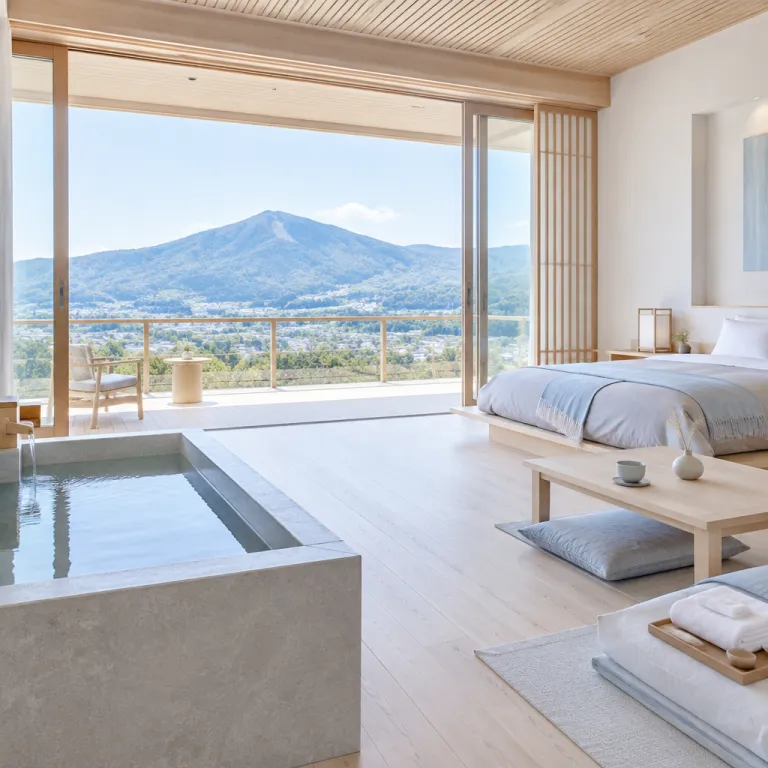
Mount Daimonji and the quiet side of Kyoto’s eastern hills
Mount Daimonji rises behind Higashiyama and quietly shapes how you experience the city. From its open summit plateau, the entire Kyoto basin stretches below in a broad fan of tiled roofs, temple spires, and the Kamo River, giving you a rare sense of scale that few urban viewpoints in Japan can match. For travellers choosing where to stay on the eastern side of Kyoto, understanding this mountain and its viewpoint helps you decide between riverside bustle and hillside calm.
The classic trail begins near Ginkaku temple (Ginkaku ji) and threads through cedar forest before breaking into stone steps that climb directly toward the giant fire character carved into the slope. This route is short but steep, so the hike feels intense for a few small bursts, then rewards you with wide views many visitors say are the best in the city. If you prefer a gentler approach, the signed Kyoto trail network and the older Isshu trail offer alternative routes that contour the mountain and link several shrines and temples.
Every August the Gozan Okuribi fire festival lights five mountains, and the Daimonji character is the first to blaze above the city. On that night the summit area is closed, yet hotels with terraces or high floors facing east become coveted vantage points for the flames and their reflection on the Kamo River. When you plan your stay across Kyoto, rooms oriented toward Mount Daimonji or the eastern ridgeline will feel more atmospheric, even on ordinary evenings when only the soft glow of the city rises toward the dark hills.
Choosing Gion and Higashiyama hideaways for the daimonji hike
Gion and southern Higashiyama sit almost directly beneath Mount Daimonji, which makes them ideal bases for a pre-breakfast or sunset hike. From many small lanes around Yasaka shrine you can see the mountain’s silhouette, and that constant presence subtly shapes how you move through Kyoto, because the main trail entrance near Ginkaku temple is never far away. If photography matters to you, pairing a hotel here with a night near other recommended photo-friendly districts creates a balanced itinerary between heritage streets and high viewpoints.
For most guests the most practical route to the trail is to take a short taxi or bus ride from Gion to the Ginkaku temple area, then follow signs for the Daimonji hiking path that begins behind the residential streets. The first junction appears after about ten minutes, where a left turn leads to the main viewpoint while the right branch connects to the longer Kyoto trail and Isshu trail segments that circle the mountain. Because the ascent gains roughly 300 metres over a compact distance, you should wear proper shoes with grip and carry at least 500–750 ml of water per person, even if the weather in Kyoto feels mild at street level.
Travellers who value quiet evenings will appreciate that Gion’s backstreets empty quickly once the day trippers leave, leaving only the sound of temple bells drifting from the mountain. From a hotel balcony facing north, you may trace the line of the fire character by day, then watch the city lights flicker on beneath the dark outline. When you compare room categories, ask specifically whether any floors offer partial views toward Mount Daimonji, because even a small glimpse of the summit ridge can transform your sense of place.
Access from Kyoto Station, Keage Station, and Nanzen ji
Many visitors arrive at Kyoto Station and underestimate how close Mount Daimonji feels once you move into the eastern districts. From Kyoto Station you can reach the Keage Station area on the Tozai subway line in under fifteen minutes, then walk about ten minutes through the Nanzen ji temple precincts toward the lower slopes of the mountain. This approach gives you a softer introduction to the hike, because the route passes gardens, aqueducts, and quiet lanes before you commit to the steeper forest sections.
Hotels near Kyoto Station suit travellers who prioritise rail connections, yet they require a short transfer to reach the Daimonji trail or the Ginkaku temple trailhead. By contrast, staying near Keage Station or Nanzen ji places you within walking distance of several access points to the Kyoto trail and Isshu trail, including a junction where a left fork climbs toward the summit area while another path contours the mountain toward Ginkaku. When you evaluate where to stay across the city, consider whether you prefer to step directly from your lobby into a hiking route or trade that convenience for easier shinkansen access.
The historic Nanzen ji complex itself sits at the base of the mountain and offers a different kind of viewpoint, framed by temple roofs and maple trees rather than the open city panorama from the fire bed. Guests who choose accommodation near Gion’s geisha district can still reach this area easily, and resources on staying near Gion and how Kyoto’s geisha district shapes your trip explain how to balance nightlife, culture, and early morning hikes. From either Gion or Keage, taxis to the main Daimonji trailheads remain affordable, especially if you share the ride with fellow hikers returning from the mountain.
Understanding the daimonji fire, festivals, and seasonal stays
The famous Daimonji fire that crowns Mount Daimonji each August is part of the Gozan Okuribi ceremony, in which five giant characters and shapes blaze on surrounding peaks to send ancestral spirits back to the other world. While the summit area closes for safety during the fire festival, the days before and after still offer excellent hiking, and hotels across Kyoto adjust their rates and availability in response to this brief but intense demand. If you hope to watch the flames from a private balcony or rooftop, you will need to book early and confirm that your room faces the correct mountain.
Outside the festival period, the Daimonji hike remains one of the best short walks in Kyoto because it combines cultural context with a compact mountain ascent. The main trail is well marked, with a clear route that begins as a small residential lane, then narrows into forest steps before emerging onto the broad fire bed where volunteers arrange logs each summer. From this viewpoint you can trace the Kamo River, Kyoto Station towers, and distant Arashiyama hills, which helps you understand how the city nestles between mountain ranges.
Seasonality matters when you plan both your accommodation choices and your time on the mountain paths. Spring brings cherry blossoms around Ginkaku temple and Nanzen ji, while autumn paints the Kyoto trail and Isshu trail forests in deep reds that contrast beautifully with the pale city below. In the humid summer months, early morning or late afternoon departures from your hotel will make the ascent more comfortable, and you should carry travel insurance that covers hiking in case a twisted ankle or sudden storm interrupts your plans.
Gion and Higashiyama hideaways for hikers and city wanderers
Gion and Higashiyama offer a rare combination of atmospheric streets and direct access to Mount Daimonji, which is why many repeat visitors base themselves here. From these neighbourhoods you can walk to the Ginkaku temple trailhead, continue along the Philosopher’s Path, or drop into side alleys that climb gently toward the mountain before joining the main route. This proximity means you can fit a hike between tea ceremonies, gallery visits, and evening strolls past lantern lit wooden facades.
When comparing hotels in this area, pay attention to how rooms frame the relationship between city and mountain, because that visual dialogue defines Kyoto at its best. A window that captures both a temple roof in the foreground and the faint outline of the Daimonji fire character on the slope behind will feel more memorable than a generic urban view, even if the room itself is small. Some properties also offer guided hiking experiences that follow the signed segments up to the summit plateau, then descend via alternative Kyoto trail or Isshu trail routes to lesser known shrines.
If photography is a priority, consider pairing a Gion stay with advice from guides on where to stay for the best photo spots across Kyoto, then plan your Mount Daimonji ascent for late afternoon when the low sun washes the city in gold. From the viewpoint you can frame the grid of streets, the distant Kyoto Station complex, and the soft curve of the Kamo River in a single composition. Returning to your hotel through quiet Higashiyama lanes after this loop, you will feel how the mountain and the city share a single, continuous atmosphere.
Practical planning: routes, safety, and aligning your hotel choice
Planning a stay around Mount Daimonji begins with choosing which route suits your fitness and schedule. The most direct trail from the Ginkaku temple side takes about forty minutes to reach the summit fire bed, while longer options via the Kyoto trail or Isshu trail can turn the outing into a half day mountain traverse. Whichever path you choose, remember that the network includes several junction points where a left or right decision will significantly change your hiking time, so carrying a simple map, offline app, or GPS track is wise.
Safety on the hike is generally straightforward, yet the steep stone steps can become slippery after rain or in winter, and there are no shops once you leave the residential streets. Good travel insurance that explicitly covers hiking in Japan will give you peace of mind, especially if you plan to explore multiple mountain routes around Kyoto during your trip. While the paths are popular, they are not patrolled like urban parks, so you should inform your hotel of your intended route and expected return time if you are hiking alone, and note the emergency number in Japan (119) in case of accidents.
Aligning your hotel choice with your hiking plans also means considering other landscapes, such as the bamboo groves of Arashiyama, which influence where you might want to sleep on different nights. Resources that explain how the Arashiyama bamboo grove in Kyoto should shape your hotel choice can help you balance nights near the western hills with nights beneath Mount Daimonji in the east. By structuring your itinerary so that you stay near Gion and Higashiyama for the Daimonji hikes, then shift toward Kyoto Station or Arashiyama later, you will experience the city from multiple viewpoints rather than repeating the same streets each day.
Key figures and practical statistics for mount Daimonji stays
- The main trail from the Ginkaku temple area climbs roughly 300 metres over about 1.5 kilometres, which most reasonably fit travellers complete in 30 to 45 minutes one way according to Kyoto City tourism data and local hiking maps.
- Kyoto receives more than 50 million visitors annually, and city surveys indicate that around 10 to 15 percent of repeat visitors include at least one hike such as Mount Daimonji or other Kyoto trail segments during their stay.
- Travel insurance providers report that hiking related incidents in Japan account for a small fraction of claims, yet average medical costs for a minor injury can exceed 30 000 yen, which underlines the value of coverage even for short hikes.
- During the Gozan Okuribi fire festival, hotel occupancy in central Kyoto typically reaches above 90 percent, with rooms that face Mount Daimonji or other fire characters often selling out several months in advance.
- The distance from Kyoto Station to the Keage Station area near Nanzen ji is approximately 5 kilometres by rail and walking, which translates to a travel time of about 15 to 20 minutes door to door for most hotels.
FAQ about mount Daimonji and staying nearby
How difficult is the mount Daimonji hike for first time visitors
The standard hike from the Ginkaku temple side is short but steep, with many stone steps that can feel demanding if you are not used to hills. Most first time visitors who are comfortable walking in a city can complete the ascent in under an hour, provided they take breaks and wear proper footwear such as light hiking shoes or sturdy sneakers. If you prefer a gentler gradient, you can use sections of the Kyoto trail or Isshu trail that contour the mountain before joining the main summit area.
Where should I stay in Kyoto for easy access to the daimonji trail
For the quickest access to the trail, choose accommodation in Gion, northern Higashiyama, or near the Ginkaku temple and Philosopher’s Path area. From these neighbourhoods you can often walk to the trailhead in 15 to 25 minutes, which makes sunrise or sunset hikes much easier to fit around sightseeing. Staying near Keage Station or Nanzen ji also works well, because you can connect to several Kyoto trail and Daimonji routes on foot.
Can I see the gozan okuribi fire festival from my hotel
Many hotels in central Kyoto offer partial views toward Mount Daimonji, but only rooms facing the eastern mountains at the right angle will see the full fire character. When booking for the Gozan Okuribi fire festival, you should contact the property directly and ask whether any rooms or lounges have a confirmed viewpoint. Expect higher rates and strict cancellation policies during this period, because demand for mountain facing rooms is extremely strong.
Is travel insurance necessary for hiking mount Daimonji
Mount Daimonji is a relatively modest mountain, yet the trails involve uneven steps, tree roots, and occasional slippery sections after rain. Travel insurance that covers hiking in Japan is strongly recommended, because even a minor injury can require clinic visits or transport assistance that become expensive without coverage. Many policies include this type of activity by default, but you should verify the details before your stay on the eastern side of Kyoto.
How do I reach the mount Daimonji trail from Kyoto Station
From Kyoto Station you can take a bus or taxi directly to the Ginkaku temple area, which is the most popular starting point for the Daimonji trail. Another option is to ride the subway to Keage Station, walk through the Nanzen ji precincts, then connect to the Kyoto trail or Isshu trail segments that lead toward the mountain. Both approaches take around 30 minutes in total, depending on traffic and walking speed, and hotels can provide up to date route suggestions at check in.